This outdoor camp leader of ours, he was German, and he would only cook one piece of some
food pyramid meal for each kid, and there were many of us. My best friend Anne Marie and I
would dream of many second servings on our plates, letting it go on a while, and it made us feel
full. Anyhow, that is to say that there is no wrong dream.
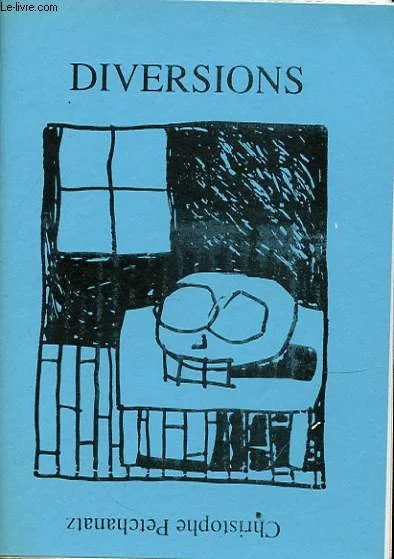
Before music and before recording, Christophe Petchanatz was a child in Haute-Saône, an
eastern French region that had already been through industrial collapse by the late 1960s, so
certain things were simply left behind.
Metal was still present there, and it expanded when the sun reached it. Pipes carried nothing
but still made noise when touched, and factories stood empty without entirely disappearing.
Things stayed where they were, and sounds happened without much reason, because that was
how they worked.
When he spoke about this to me, he did not describe these places as welcoming, and he did not
say they allowed him anything in particular. He only said that they were there, because a place
does not have to invite you. It only has to be there long enough for things to happen.
Christophe began making music on a damaged piano. The instrument did not respond the
same way twice, and he worked with that rather than correcting it. Much of the work that later
appeared under the name Klimperei followed the same approach. When sound was too
predictable, it lost its pull.
There was a similar pace to other things around him then, and he remembers the late seventies
as a time when waiting was unavoidable. Letters went out and came back eventually. He
duplicated cassettes himself, labeled them, listened again while copying, and. noticed that the
sound came back not the same each time.
Some copies felt better than the originals. Small publications arrived now and then, sometimes
barely legible, sometimes misaligned, and he did not fix that, or try to. He liked that things
came marked by the time it took to reach him. Later, when pieces began to gather under the
name Klimperei, he recognized the same condition. Work that moves slowly, changes as it goes
and isn’t fixed.

In the early 80s, he remembers spending long stretches alone in rooms, often at night, with
very little to separate one activity from another. He would read for a while, then stop, then play
a few sounds, then sit without doing anything. Music would be playing while he read, or he
would be reading while something continued to play, and it wasn’t always clear which was first.
Time flattened out. He mentioned LSD as something that made this way of noticing feel less
strange, not revelatory, just confirming, and he did not move on.
Christophe keeps evenings more than decisions. Sitting at a table late at night, the room was
mostly quiet and he played a few notes on the piano. So Klimperei began to surface sometime
in the mid-1990s, though he doesn’t describe a moment when it began. Short pieces gathered
and in them melodies that did not seem interested in developing.
He talks about this period with a kind of looseness. He says sounds came more easily then,
though he doesn’t know why, like opening a tap and letting water run. He stays nearby and
when it has gone far enough, it closes. Very little effort is involved. That ease troubles him. He
calls it pathological, then laughs, then says it’s necessary. A way of not going mad. He never
wanted an ordinary life because it wasn’t all that.
There was a piano in the room and a microphone nearby. He would play a short phrase and let
it run, and when it stopped changing he would move on. That, to him, was transcendental,
something that belongs only to sound itself. It’s the sound of a train, not the image, but what
you hear once you’re already inside it, going on long enough that you stop waiting for anything
to happen. When it ends, it doesn’t resolve, it just disappears.
He talks about ideas the same way. You don’t decide to protect them. You notice when one has
you, and once it has you, you stay with it as long as it holds, and that is enough. What other
people think does not enter, or not in a way that matters.
With music it is the same. As long as the sound holds, you stay inside it, and you do not have to
do anything else. When it begins to ask to be watched, when it starts to look at itself, something
breaks, and it is like waking up inside a dream, which is not comfortable, especially in
performance.
After that the piece does not continue. He does not try to rescue it. It just stops.
There is a kind of goodness and he circles it without going in, and the finished feeling already
finished, nothing going to change and not needing to, and it holds like that. It has a pull to it
and it works a little too well. The sound begins to look at itself and that is when it stops, it
stops there and does not continue, it is not alive once it does that. It is a reason not to stay, or
not to stay long, because to stay is to close it and to hold it, is to close it down, and it does close.